

Hair Care Guide: How to Keep Your Hair Healthy Every Day
-
kerafinekf.com
- Posted on
- 0 comments
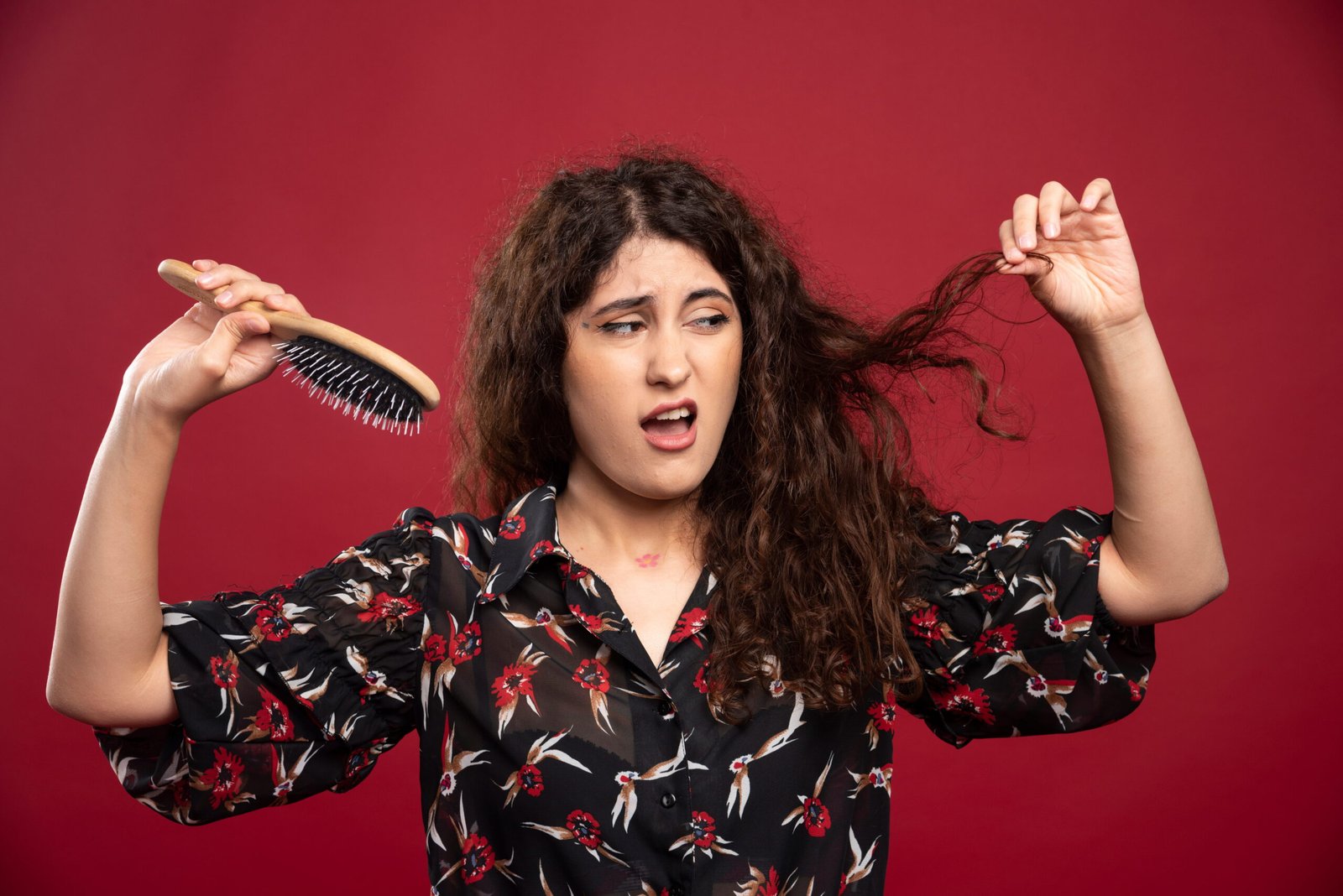
Beautiful, healthy and easy to manage hair doesn’t happen overnight. Pollution, UV rays, hard water, heat styling, humidity, sweat, and chemical treatments are all stressors to your hair every day. These factors weaken the hair cuticle over the time, resulting in frizzy, dry, split ends, rough hair, hair fall and hair breakage. The good news? By using a consistent and personalized hair care routine, you can help to protect your hair and restore its original strength, shine and softness.
You can make a big change in your hair health based on the right techniques and the right hair products used, even if your hair is dry, oily, curly, damaged or chemically treated.
This detailed hair care guide covers:
- This detailed hair care guide covers:
- Weekly maintenance routines
- Hair care mistakes to avoid
- Ingredient-based hair care
- Hair care tips for Indian weather
- Best hair treatment practices
- Health and safety issues concerning hair treatments
- How to optimally select the best hair care products
- Hair growth and scalp health tips
Why Daily Hair Care Matters
Healthy hair is not achieved through occasional treatments alone. Your hair is constantly exposed to the environmental stressors which will gradually damage the hair cuticle and barrier over time. If left unmanaged, this damage will pile up and result in dry, frizzy, falling, weak, dull, rough and split hair.
There are lots of little things you do daily, and each one you do will impact how healthy your hair is in the long run.
Daily hair care is crucial for healthy hair as small habit contributes to strong and smooth hair in long run. Also, how you wash, dry, style, protect your hair and how you nourish your hair will have a direct influence on the strength, smoothness and manageability of your hair.
Major Causes of Everyday Hair Damage
The primary reasons for everyday hair damage are:
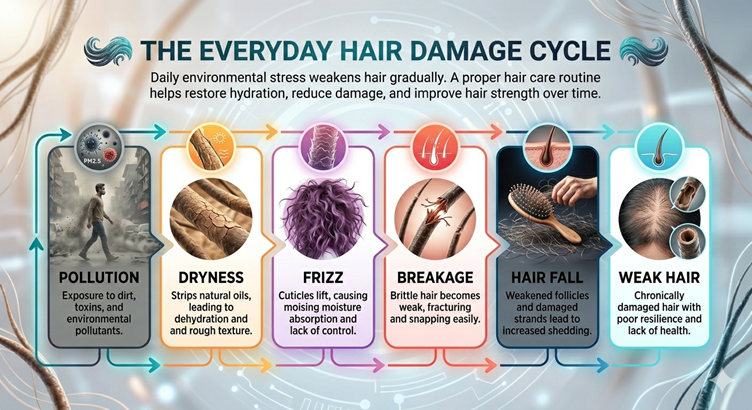
1. Pollution & Dust Exposure
Pollutants from the environment settled on the scalp and hair shaft throughout the day. Over time, this accumulation lead to blocked hair follicles, poor hair roots and lifeless hair.
a. Effects on Hair:
- Increased scalp buildup
- Makes the texture of the surface dull and rough.
- Weakened hair roots
- Dryness and irritation
b. Prevention Tips:
- Cleanse scalp regularly
- Lightweight protective serums should be used.
- Do not allow too much product build-up to occur.
- During high levels of pollution, cover hair with your hat or scarf.
2. Heat Styling Damage
Moisture is lost from the hair shaft and protein is weakened when straighteners, curlers, and blow dryers are frequently used.
a. Signs of Heat Damage:
- Split ends
- Rough texture
- Increased breakage
- Loss of shine
- Dry and stiff hair
b. Prevention Tips:
- Always apply heat protectant
- If you’re using a low or medium heat setting, that’s a good choice.
- Reduce the frequency of heat styling.
- Air dry whenever possible
3. Hard Water Exposure
Hard water contains excess minerals which makes hair rough, dry and difficult to handle.
a. Common Symptoms:
- Rough or sticky hair
- Increased tangling
- Frizz after washing
- Dry scalp
Solutions:
- Use hydrating shampoos
- Use deep conditioning masks once a week.
- Use leave-in serums for smoothness
4. Chemical Treatments
Coloring, rebonding, smoothing and bleaching will destroy the cuticle and lead to more moisture loss.
a. Hair Problems After Chemical Treatments:
- Weak hair structure
- Increased dryness
- Hair breakage
- Elastic or stretchable strands
- Lack of shine
b. Recommended Care:
For healthy hair, consider protein-enriched hair masks to reinforce weak hair strands, keratin-based products for smoother hair and to heal damaged ends, and sulfate-free cleansers that will cleanse the scalp without stripping natural moisture. In addition to the proper product, minimizing heat styling can help to prevent dryness, breakage and long-term damage.
Benefits of Following a Consistent Hair Care Routine
A structured programme will lead to strengthening the hair over a period of time and enhance hair quality.
Long-Term Benefits:
- Better softness and smoothness.
- Better moisture retention
- Less frizz and flyaways
- Stronger hair strands
- Improved shine and elasticity
- Healthier scalp environment
- Less breakage and split ends
- Easier styling and manageability
With a well-balanced, hydrated, and clean scalp, your hair will gradually grow stronger and healthier.
How a Healthy Hair Routine Improves Hair Strength and Shine
Consistency is the key to hair health. But even the finest hair products can’t fix damage if it continues to be caused by your daily routines that are harming the hair shaft.
A good habit is to help:
- Maintain scalp balance
- Reduce moisture loss
- Enhance shininess and softness
- Prevent split ends
- Strengthen weak strands
- Reduce hair breakage
- Improve overall manageability
The key to maintaining healthy hair begins at the scalp. With a clean, nourished, balanced scalp, hair grows and dives easily and looks good.
Understand Your Hair Type Before Building a Routine
There are various types of hair and they need different products and hair care routines. Improper usage can cause additional dryness, oiliness, frizz and hair fall.
1. Dry & Frizzy Hair
Dry hair is hair that is not moisturized and can feel coarse, rough, and hard to manage.
a. Common Signs:
- Frizz and flyaways
- Rough texture
- Split ends
- Tangling
- Dull appearance
b. Recommended Routine:
- Use sulfate-free shampoos
- Deep condition weekly
- Use nourishing hair cream or hair serum
- Avoid excessive washing
- Regularly use hydrating masks.
c. Best Ingredients:
- Argan oil
- Keratin
- Shea butter
- Coconut oil
Oily Hair & Scalp
Oily hair is the result of overproduction of sebum by the scalp.
a. Common Signs:
- Greasy roots
- Flat hair
- Product buildup
- Frequent itching
b. Recommended Routine:
- Wash 2–3 times weekly
- Avoid heavy styling creams
- Focus shampoo on the scalp
- Use lightweight conditioners
3. Curly & Wavy Hair
The natural structure of curly hair means that it tends to lose moisture more quickly.
a. Recommended Hair Care Tips:
- Use moisturizing cleansers
- Avoid brushing dry curls
- Use leave-in conditioners
- Apply curl-defining creams
- Use satin pillowcases for sleeping with.
The best curly hair products can help to ensure your curls stay defined, while minimizing frizz and dryness.
b. Chemically Treated Hair
Hair that has undergone coloring, smoothing, rebonding, or keratin treatments requires extra nourishment.
c. Essential Tips:
- Use keratin-safe formulas
- Minimize heat styling
- Use protein-rich masks
- Apply serum regularly
- Protect hair from UV exposure
Best Hair Care Routine Based on Your Hair Type
| Hair Type | Main Concern | Best Products | Key Routine |
| Dry Hair | Frizz & Roughness | Hydrating shampoo + hair cream | Deep conditioning |
| Oily Hair | Greasy scalp | Lightweight shampoo | Scalp cleansing |
| Curly Hair | Moisture loss | Curl creams & leave-ins | Hydration layering |
| Damaged Hair | Breakage | Protein masks | Repair treatments |
| Chemically Treated Hair | Weak texture | Keratin products | Heat protection |
Step-by-Step Daily Hair Care Routine
1. Morning Hair Care Routine
The morning routine is focused on protecting your hair against any environmental stresses.
Morning Routine Checklist:
- Gently detangle hair
- Apply anti-frizz serum
- If styling, use the UV or heat protectant.
- Avoid tight hairstyles
- Keep hair hydrated
Why This Matters:
Morning protection minimises friction, moisture loss and heat damage during the day.
Washing Your Hair Correctly
Over washing is another major cause of scalp imbalance and dryness.
Best Washing Practices:
- Wash your hair 2-3 times a week.
- Use lukewarm water
- Shampoo the scalp, NOT the ends of the hair.
- Massage gently using fingertips
- Rinse thoroughly
Why Sulfate-Free Shampoo Matters
Over time, sulfates can strip away natural oils, and diminish the barrier that protects hair.
These are helpful tips on using sulfate-free formulas:
- Retain moisture
- Reduce frizz
- Protect colored hair
- Improve softness
- Maintain scalp balance
The first step towards choosing the best hair care products is to pick hair friendly cleaners.
The Correct Hair Wash Routine for Healthier, Shinier Hair
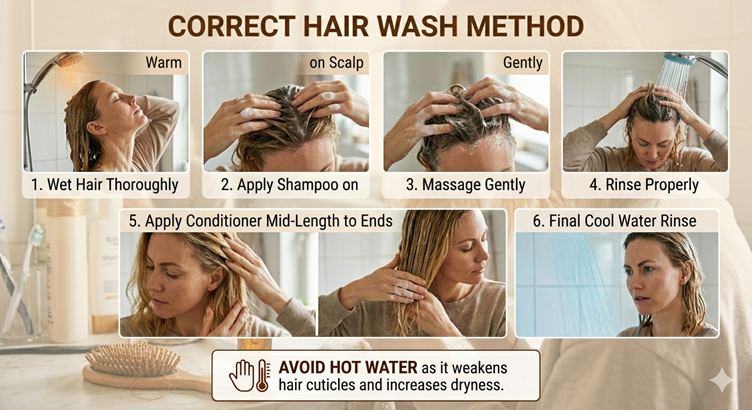
Step-by-Step Visual:
- Wet Hair Thoroughly
- Apply Shampoo on Scalp
- Massage Gently
- Rinse Properly
- Apply Conditioner Mid-Length to Ends
- Final Cool Water Rinse
Highlight Box:
Don’t use hot water, which can damage the hair cuticle and further dry the hair.
Importance of Conditioner
After shampooing, conditioner adds moisture and smoothes the cuticle of the hair.
Benefits of Conditioner:
- Reduces tangling
- Adds softness
- Improves shine
- Controls frizz
- Protects against dryness
How to Apply Correctly:
- Concentrate on mid lengths and ends
- Leave for 2–3 minutes
- Rinse thoroughly
Argan oil and keratin enriched conditioner work perfect for dry and damaged hair.
Hair Serum & Hair Cream Benefits
Hair serums and hair creams will help protect the hair from environmental damage and help to maintain a better texture and manageability.
1. Benefits of Hair Cream:
- Frizz control
- Moisture retention
- Softness and shine
- Heat protection
- Easier styling
2. Benefits of Hair Serum:
- Smooth finish
- Reduced flyaways
- Added shine
- Protection against humidity
Use a small amount on wet hair for optimal results.
Weekly Hair Care Routine for Strong & Healthy Hair
Daily care keeps your hair healthy, and weekly care repairs and strengthens your hair.
1. Deep Conditioning Hair Masks
Hair masks are a great way to provide intense, concentrated moisture to dry and damaged strands.
Benefits:
- Restores hydration
- Reduces roughness
- Repairs damage
- Improves elasticity
- Adds shine
Using masks regularly is among the best hair treatment options for damaged hair.
2. Scalp Massage & Hair Oiling
Scalp massaging will promote better circulation and relaxation of the scalp every week.
Recommended Oils:
- Argan oil
- Coconut oil
- Almond oil
- Rosemary oil blends
Benefits:
- Better scalp nourishment
- Reduced dryness
- Improved softness
- Stress relief
Regular Trimming
If left untreated, split ends keep on climbing the hair shaft.
Recommended Frequency:
- Every 6–8 weeks.
- Regular trims make hair look better and reduce damage to the already frizzled hair.
Follow This Weekly Hair Care Routine for Healthy Hair
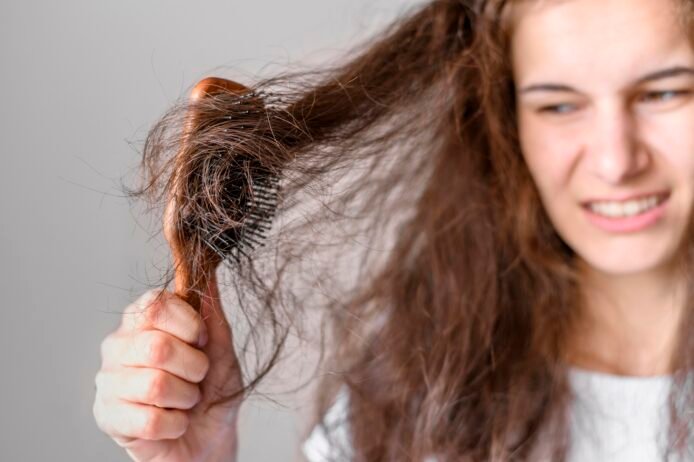
| Day | Hair Care Task |
| Monday | Gentle cleansing |
| Wednesday | Serum & scalp massage |
| Friday | Hair mask treatment |
| Sunday | Oiling + deep conditioning |
Common Hair Care Mistakes That Damage Hair
1. Overusing Heat Styling Tools: Excessive heat weakens the hair cuticle and removes moisture.
Solution:
- Use heat protectant sprays
- Lower temperature settings
- Air dry whenever possible
2. Using Harsh Shampoos: Strong cleansers can damage the scalp barrier and increase dryness.
Solution: Choose gentle and nourishing formulas.
3. Tight Hairstyles: Pony tails and buns can cause tension on the hair roots.
Solution:Loose hair styles are preferable, where possible.
4. Sleeping With Wet Hair: Wet hair can be more fragile and susceptible to friction damage.
Solution: Dry hair partially before sleeping.
Best Ingredients for Healthy Hair
1. Keratin
- Keratin will strengthen and smooth hair.
- A common ingredient in the best hair treatment solutions for damaged hair.
2. Argan Oil
- Argan oil is highly nourishing and restore hair to give it softness and shine.
- Widely used in premium shampoos, masks, and serums.
3. Biotin
Biotin promotes better-looking hair and enhances the texture of hair.
4. Proteins
Proteins repair broken and damaged strands.
Hair Care Tips for Indian Weather
Summer Hair Care
Problems:
- Sweat buildup
- UV damage
- Dryness
Solutions:
- Wash scalp regularly
- Use lightweight serums
- Prevent harmful exposure to the sun on hair.
Monsoon Hair Care
Humidity can cause frizz and scalp problems.
Solutions:
- Keep scalp clean
- Avoid heavy products
- Use anti-frizz creams
Winter Hair Care
Dryness and brittleness can occur more with cold weather.
Solutions:
- Use hydrating masks
- Avoid hot water
- Regularly use a hair cream that nourishes the hair.
Seasonal Hair Care Guide: Protect Your Hair in Every Season
| Season | Main Hair Problem | Recommended Solution |
| Summer | Sweat & UV Damage | Lightweight serums |
| Monsoon | Frizz & Humidity | Anti-frizz products |
| Winter | Dryness | Deep hydration |
How to Choose the Right Hair Products
There are a wide range of hair products available on the market, but selecting the right hair products is dependent upon the type of hair and issue.
Look For:
- Sulfate-free cleansers
- Protein-rich formulas
- Nourishing oils
- Scalp-friendly ingredients
- Hair-type-specific solutions
When selecting the best hair growth products, individuals should also look into:
- Scalp health
- Reduced breakage
- Balanced diet
- Consistent routines
Internal and external care is essential to healthy growth.
Why a Hair Care Kit Simplifies Your Routine
A complete hair care kit can help to make your hair care routine more effective and consistent.
A balanced kit may include:
- Shampoo
- Conditioner
- Hair mask
- Hair serum
Products that are designed to go together usually perform better in an average manner.
How to Maintain Salon-Like Hair at Home
There’s more to salon smooth hair than just pricey treatments. Everyday routines have a big impact.
The beauty salon smoothness of your hair isn’t all about costly treatments. Daily habits play a major role.
Key Habits for Healthy Hair:
- Consistent routines
- Weekly deep conditioning
- Heat protection
- Proper hydration
- Nutrient-rich diet
- Using high-quality hair products
The best hair products can help keep your hair in a healthy routine, however consistency is key.
Frequently Asked Question for Keratin Based Hair Care Products
Q1. What is the best daily hair care routine?
A healthy routine follows gentle cleansing, conditions and hydrates the hair, protects it from heat and deep conditions once a week.
Q2. How often should I wash my hair?
The washing frequency of 2-3 times per week is generally good for most hair types, depending on their oiliness and lifestyle.
Q3. Which ingredients are best for damaged hair?
The best hair treatment products for damaged hair often contain ingredients such as keratin, argan oil, proteins and hydrating agents.
Q4. Can hair cream reduce frizz?
Yes. A nourishing hair cream will help prevent dryness, flyaways and unmanageable hair.
Q5. What should I include in a hair care kit?
The ideal hair care kit typically consists of a shampoo, conditioner, serum, hair mask and hair styling cream that are appropriate to your hair type.
Healthy Hair Starts with Consistent Care!
Healthy hair relies on regular maintenance, diet and routine. Your objective could be for softer, thicker hair, less frizz, healthier, or smoother looking hair – all of these can be achieved with the right routine and products.
Prevent damage to the hair on a daily basis, feed the hair regularly, and pay attention to the health of the scalp to improve it in the long run. Explore salon-inspired hair care products from Kera Fine and create a hair care routine that would look amazing at the salon.
